Fintech buyers hand over money or sensitive data, so they check who is behind a site before they act. Google applies a similar test. Its documentation says that for topics such as financial stability, its systems give even more weight to content that shows strong E-E-A-T.
SEO for fintech brands starts with proof that a reader or a search system can verify.
This guide covers what Google says about trust and rankings, seven trust signals worth building, and why AI answers raise the stakes for financial topics. It also covers three popular AI search tactics that Google says you can skip.
TL;DR
- Google says trust is the most important part of E-E-A-T, and it also says E-E-A-T is not a specific ranking factor, so fintech teams should build verifiable proof and skip the hunt for a score.
- Financial topics fall under YMYL (Your Money or Your Life), where Google’s systems give extra weight to content that shows strong E-E-A-T.
- Ahrefs found that 34.3% of YMYL queries trigger an AI Overview, compared with 17.2% of other queries, so trust signals now affect AI answers as well as blue links.
- Google’s Organization markup supports legal name, Legal Entity Identifier (LEI), tax IDs, contact points, and official profile links, which lets a fintech brand state company facts in a machine-readable way.
- Regulator registers work as third-party proof, and in India the RBI directory of digital lending apps lets customers verify an app’s link to a regulated entity.
- Google’s AI search guide says site owners can skip llms.txt files, rewrite content into small chunks, and chase inauthentic mentions.
What SEO for Fintech Brands Covers
SEO for fintech brands is the work of helping financial technology companies appear in search results and AI answers when buyers look for payments, lending, wealth, insurance, or banking tools.
SEO stands for search engine optimization, which means improving where and how you show up in search. For a fintech brand, the work covers six areas:
- Product and solution pages
- Educational content on money and compliance topics
- Security and compliance pages
- About, team, and leadership pages
- Regulator and review profiles on other sites
- Your presence in AI answers from tools such as Google AI Overviews and ChatGPT
A trust signal is a fact that a reader or a search system can check outside your own claims. A license number that matches a regulator’s register is a trust signal. The words “bank-grade security” on a landing page are a claim.
Search engines call topics that can affect health, money, or safety Your Money or Your Life, or YMYL, topics. Ahrefs lists Financial as one of the YMYL categories, so fintech content sits in the group that gets the closest review.
What Google Says About Trust and Rankings
Google’s guidance on helpful content says trust is the most important member of the E-E-A-T family, which stands for experience, expertise, authoritativeness, and trust.
The same guidance says E-E-A-T is not a specific ranking factor. Google also says its systems do not use quality rater data directly for ranking. There is no E-E-A-T score to raise, so the practical job is to build the facts that make a page trustworthy.
The guidance gives two clues about what that means for fintech. Content on YMYL topics should be highly accurate and consistent with expert consensus. Pages should also show who wrote them and why, through bylines and author background.
Ahrefs analyzed 146 million search results and found that 34.3% of YMYL queries trigger an AI Overview, against 17.2% of non-YMYL queries (Ahrefs, 2025).
- Fintech buyers ask the same question twice, once before they click and once before they sign up: who is behind this? A page that answers with named people, license details, and checkable facts gives buyers and search systems something to rely on. – The AEOcite Lab Team
How SEO for Fintech Brands Builds Trust Signals That Rank: 7 Signals
-
State Who You Are in Plain Facts
Start with an About page that lists your legal company name, registered address, registration details, leadership team, and contact methods.
Then mirror those facts in markup. Google’s Organization structured data supports a legal name, tax and VAT IDs, contact points, and links to your official profiles. It also supports a Legal Entity Identifier through the iso6523Code property.
Google says markup helps it understand your organization and that it is not required for AI features. Treat it as a tidy way to state facts you already show on the page, with no promise of a ranking lift.
-
Show Your Licenses and Link to the Register
A license claim carries more weight when a buyer can check it. Name the regulator, give the license or registration number, and link to the regulator’s public register where one exists. Check the equivalent register in each market where you operate.
In India, the RBI runs a public directory of digital lending apps. RBI says the list exists so customers can verify an app’s association with a regulated entity, and the government says it has been live since July 1, 2025. RBI builds the list from data that regulated entities submit, without further validation checks. That makes accuracy your job, so confirm that your app name, entity name, and partner details match everywhere they appear.
-
Put Named Experts on Every Money Page
Google’s guidance asks who created the content and how. Show a byline, a short bio with real credentials, and a link to a profile that a reader can check. For pages on lending, investing, or insurance, add a reviewer line that names a qualified person.
Never fake this. Google’s guidance says fabricated profiles, AI-generated headshots, and false credentials are deceptive and make a page less trustworthy. An unnamed “editorial team” on a page about loan terms gives a buyer little to judge.
-
Publish Content Only You Can Write
Generic explainers such as “what is a payment gateway” repeat what many other sites already say. Google’s AI search guide describes this kind of content as commodity content.
Fintech companies hold material that others do not, such as settlement timelines, failure patterns, pricing breakdowns, and process screenshots from the real product.
Turn that into pages with a clear point of view. Anonymize customer data, get compliance sign-off, and cite the source of every figure.
-
Make Accuracy Reviewable
Google asks YMYL content to be accurate and consistent with expert consensus. Make that easy to check:
- Add a “last reviewed” date and the reviewer’s name
- Cite primary sources, such as regulator circulars and official fee schedules
- Fix errors in plain view and note the correction
- Keep rates, limits, and fees on the page in sync with the product
An old fee table on a high-ranking page does more damage in fintech than a missing blog post.
-
Show Security Proof Buyers Can Verify
For B2B fintech, build a security page that names each certification, such as SOC 2, ISO 27001, or PCI DSS, along with the issuer, scope, and date. Do not post a wall of badges without detail.
For consumer flows, remember that perception drives action. Baymard also found that people judge security by how the card form looks and feels, so make sensitive fields look distinct from ordinary ones. A newer fintech brand has less name recognition to lean on, so this matters more for you.
-
Keep Your Third-Party Profiles Consistent
Buyers check independent sources, such as review sites, app stores, regulator pages, and company profiles. Use the same legal name, product names, and description everywhere. Link your official profiles from your Organization markup with the sameAs property, and ask real customers for reviews on the sites your buyers use.
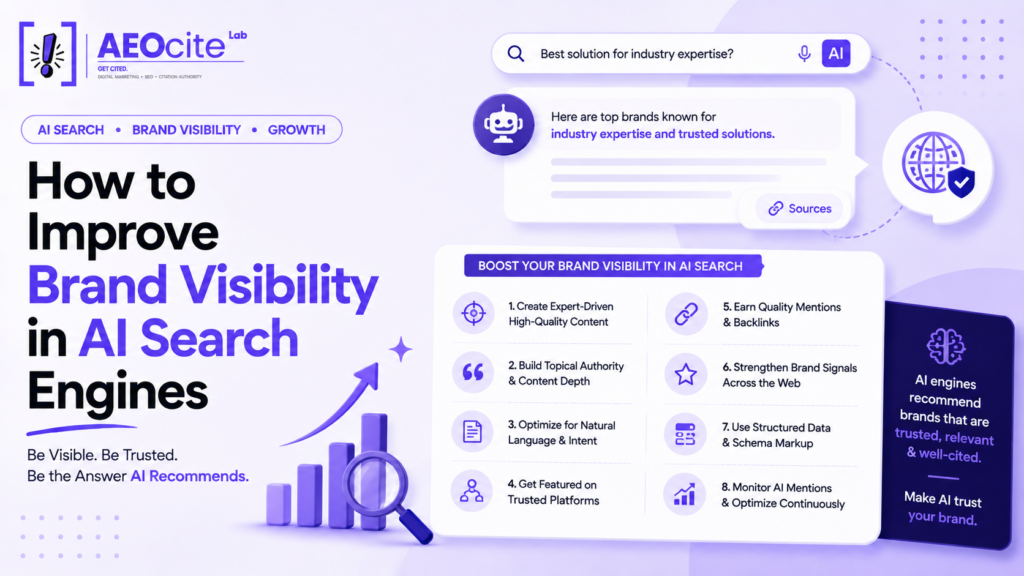
Consistent profiles give buyers one clear picture of your company, and they make it easier to improve brand visibility in AI search engines over time.
Why AI Answers Raise the Stakes
Financial buyers ask questions, and questions trigger AI answers. Ahrefs found that AI Overviews appear on 57.9% of question queries, and YMYL queries trigger them at twice the rate of other queries. Google’s AI search guide says its AI features rely on the same fundamentals as regular search. Your pages must be indexed and eligible to show a snippet.
Informational pages work best when you optimize content for Google AI Overviews with a clear answer near the top, backed by the signals above.
What You Can Skip
Google published an AI search guide, updated in July 2026, that addresses popular tactics. It says site owners can skip llms.txt files, rewriting content into small AI-sized chunks, and seeking inauthentic mentions of the brand on other sites. It also warns against putting too much focus on structured data.
That guidance covers Google Search, and other AI tools may behave differently. The sensible response is to measure, and teams that track brand mentions in AI search can see which signals move their visibility and which are noise.
Your product is trusted by customers and invisible to new buyers.
AEOcite Lab reviews your trust signals, search visibility, and AI answer presence in one pass. Review Our SEO Services
The Fintech Trust Signal Checklist
| Trust signal | Where it lives | What to check |
| Company identity | About page and Organization markup | Legal name, address, and registration match the register |
| Regulator proof | Footer, About page, and license page | License number, regulator name, and link to the public register |
| Named experts | Bylines and reviewer lines | Real credentials and a checkable profile |
| Original content | Blog and research pages | Data from your own product, with cited sources |
| Reviewed accuracy | Rates, fees, and guides | Last reviewed date and a named reviewer |
| Security proof | Security page and payment forms | Certification, issuer, scope, date |
| Third-party profiles | Review sites and app stores | Same names and descriptions everywhere |
Before you start on this list, audit your website for AI search readiness to see which gaps matter most.
Final Thoughts
Fintech brands rank when buyers and search systems can verify who they are. That means plain company facts, license proof, named experts, original content, reviewed accuracy, security proof, and consistent profiles.
These make up the core of SEO for fintech brands, and every claim needs a compliance check before it goes live.
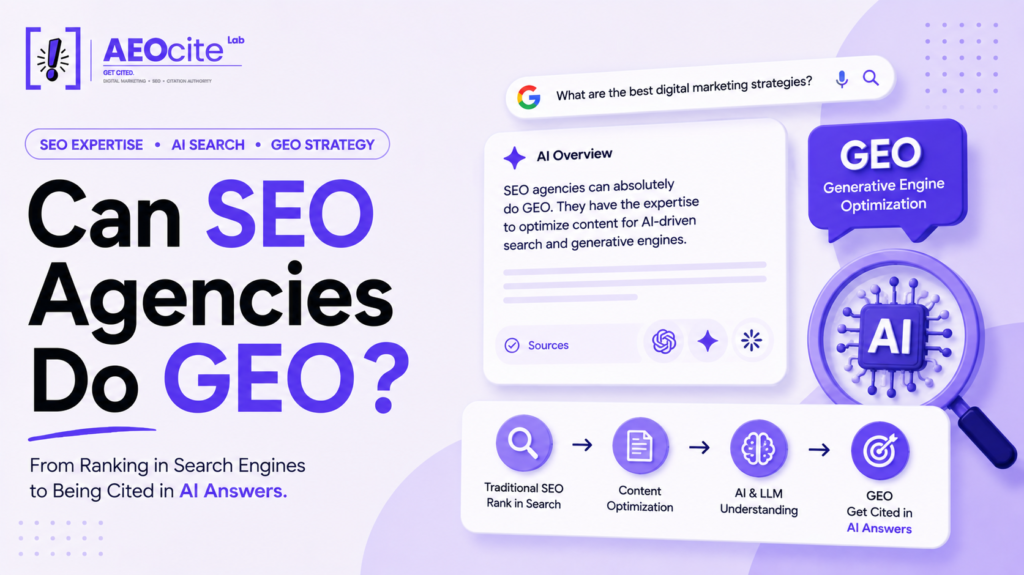
AEOcite Lab is an answer engine optimization (AEO), generative engine optimization (GEO), and AI SEO agency. We work on the search and AI answer side of this list through our SEO, AEO, and AI SEO services.
If you are shortlisting partners, ask each one how they handle compliance review and what they would do beyond the fundamentals Google describes. Put both questions to each of the B2B SEO firms in India on your list, and weak pitches become easy to spot.
FAQ
-
Is E-E-A-T a ranking factor for fintech sites?
Google says E-E-A-T is not a specific ranking factor, and it calls trust the most important part of the framework. Its systems give more weight to strong E-E-A-T content on topics such as financial stability.
-
How long does SEO for fintech brands take to work?
Timing depends on your competition, your starting authority, and how fast compliance can approve content. Google does not guarantee rankings, so be careful with any agency that promises a date. Track qualified leads along with rankings.
-
Do fintech sites need schema markup?
Markup is optional, and Google says it is not required for AI features. Organization markup is still a clean way to state your legal name, identifiers, contact points, and official profiles. Expect clarity from it with no guaranteed ranking lift.
-
Do trust badges help conversion?
They can, because people judge security by how a payment form looks and feels, according to Baymard. A badge cannot stand in for real compliance. Show certifications with the issuer, scope, and date, and place security cues next to the fields that ask for sensitive data.
-
Can we use AI to write financial content?
A qualified person must own and review anything on a YMYL topic. Never give AI-written pages a fake expert byline, because Google’s guidance treats fabricated authorship and false credentials as deceptive.
-
Do B2B and B2C fintech brands need different trust signals?
Yes. B2B buyers lean on security pages, certifications, and references. Consumers lean on regulator registers, reviews, app store ratings, and how a sign-up or payment flow looks.
-
How do we keep content fast with compliance reviews?
Create a pre-approved library of claims, disclaimers, and source documents. Assign one reviewer per topic, and publish a last reviewed date on each page. This shortens review cycles without lowering the standard.
-
What should a fintech brand track?
Track demo requests, sign-ups, and qualified leads from organic search, along with branded search and AI mentions. Reporting like this also makes it easier to choose an SEO agency that is accountable for outcomes.